Assortment
Fruit
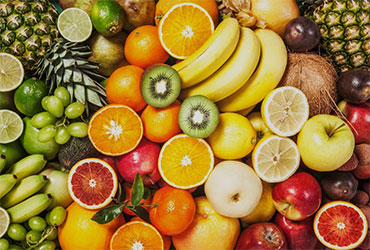
Fruit is the edible fruit of a bush or tree. It is an important component of human and animal food. List of the most valuable fruits: apples, persimmons, avocado, banana, blueberries, grapefruit, figs, kiwi, pineapple, grapes, lemon, blackberries. Every day, alternate the use of fruits and be sure your health will thank you with interest!
The main groups of fruits:
- Pome fruits - apples, quince.
- Stone fruits - avocado, peaches, mango, plum, apricot.
- Berries - grapes, strawberries, gooseberries, blackberries, raspberries.
- Walnut - hazelnuts, pistachio, hazel, almonds, peanuts.
- Subtropical and tropical - persimmon, oranges, dates, bananas.
Fruit classification allows you to see how diverse a food category is. Each group has its own individual characteristics. For example, nut-bearing fruits are high-calorie foods, and subtropical citrus fruits have high acidity.
Pears
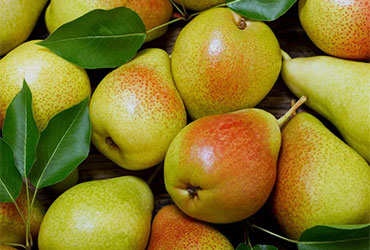
Pears are refreshing and healthy fruits. They are rich in fiber and antioxidants, and regular consumption of these fruits contributes to weight loss, stabilization of sugar in the bloodstream. The pear is a member of the Rose family, which, in addition to flowers, includes a long list of delicious berries and fruits. Apples, cherries, plums, peaches, medlar, raspberries also belong to this family. The fruits of the pear tree come in many different shades: green, red, yellow and even brown. Some of the varieties do not change their color after ripening, which complicates the selection of the fruit according to the degree of maturity. Ripe fruits are sweet, tasty and rich in nutrients, yet crisp like apples and juicy like peaches. Today pears are grown in almost all countries. But on a global scale, China is considered the largest producer of these fruits - it accounts for almost 3/4 of the total volume of pears. Also for industrial purposes, the fruit is grown in Argentina, the USA, some European countries, New Zealand, South Korea.
Plum
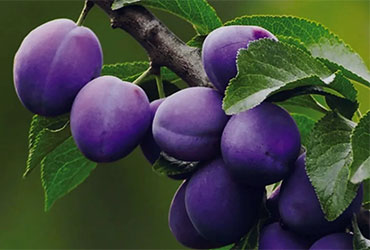
Renklode, Hungarian, Mirabelle ... You can list the names of varieties loved by many for a long time. They say that there are at least six thousand of them. And you can call them all with one understandable word - plum. Sometimes this fruit unfairly pales against the background of outlandish exotics. But in vain, because it is very useful and tasty. One of the most interesting facts from the "biography" of the plum is the huge number of varieties of this plant. Its fruits are spherical, oval and even heart-shaped. It is difficult to name one color typical for plums: they are blue-black, purple, red, purple, green, yellow and even white. Plum pulp is so varied. Regardless of the variety, the nutritional value of most plums is, if not identical, then very similar. Although the calorie content of these fruits varies between 80-120 kcal. Plums, like other fruits, are a natural multivitamin. They contain vitamins of group B, C, A, E, K. Scientists have found calcium, potassium, iron, phosphorus, magnesium, polyphenols, fiber in the composition of plums. Due to the richness of nutrients, they should appear in the diet of adults and children in any form: fresh, dried, frozen, in the form of compotes and jams. Due to their high fiber content, plums are considered beneficial for improving bowel function. And pectin in combination with organic acids makes the fruit useful for cleansing the body of excess fats. In particular, at the cellular level, they eliminate excess cholesterol. Plum is a well-known antioxidant fruit. Moreover, dark varieties have a particularly strong antioxidant ability. Plums contain the main components necessary for the healthy functioning of the human body. The unique composition of these fruits makes them useful for the digestive and nervous systems, they protect against cancer, osteoporosis and hypertension. And although it is advised to keep them in the refrigerator to prolong the freshness of the plums, fruits at room temperature are still considered the most delicious. A juicy and tasty fruit, plums are widely used in cooking. They make delicious jams, compotes, marmalades, fillings for pies, sauces for meat.
Figs
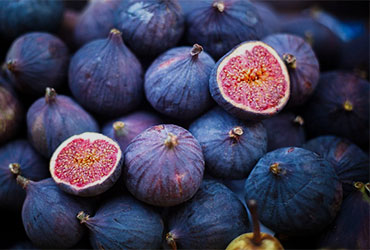
Fig, fig tree, fig tree, wine berry ... All these are the names of the same plant with delicious, sweet fruits. Figs are rich in many nutrients, antioxidants and vitamins. Many people have never tasted the fresh fruits of a fig tree, but meanwhile they are radically different from the taste of dried fruits and rather resemble a mixture of peaches and strawberries. Figs are the fruits of a subtropical tree of the genus Ficus. On rocky soil, it grows as a shrub, although in more favorable conditions it can turn into an 11-meter tree. One such plant is capable of producing several hundred fruits per season. Fruits of different varieties may differ not only in color, but also in taste. The color of the fruit can be from black-purple to greenish-yellow, and the color of the flesh can range from pale pink to purple or amber. However, they are all pear-shaped, with juicy pulp and multiple seeds inside. Biologists talk about the existence of more than a thousand varieties of figs. Fig fruit is a delicious dessert with few calories but rich in fiber, minerals, vitamins and antioxidants. Interestingly, figs are compared to apples in terms of their antioxidant content. If we talk about dried fruits, then the concentration of all components in them increases several times. True, this also applies to calorie indicators: 100 g of dried fruits contain almost 250 kcal versus 74 kcal in the same amount of fresh fruits. Fresh figs are a perishable fruit that should be eaten within a day or two after purchase. A good fresh fruit is easily recognizable by its rich color, delicate texture (but not loose) and firm stem. The aroma of the ripe fruit is delicate and sweet. A sour smell indicates that it has begun to deteriorate, a bitter smell indicates that the fruit has not yet ripened. It is better to give preference to fully ripe, as they contain more antioxidants. When buying dried fruits, it is also important to pay attention to their appearance, texture and smell. They should also be soft, with a pleasant smell, and free from damage and mold. Ripe fruit should be stored in the refrigerator, wrapped in paper or placed in a shallow container. This is necessary so that the tender fruits do not dry out or crinkle. Unripe fruits are stored at room temperature, but away from sunlight. Dried ones will stay fresh for several months if stored in a cool, dark place (maybe a refrigerator). In any case, the fruits of the fig tree must be isolated from extraneous pungent odors, since they have the ability to quickly absorb aromas from the outside. Fig is an amazing fruit with unusual properties, including healing ones. Perhaps that is why for several thousand years it has been one of man’s favorite fruits.
Bananas
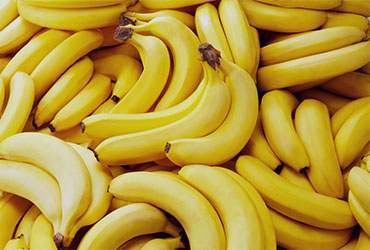
Although we are all used to calling bananas fruits, from a botanical point of view they belong to berries. Bananas are exotic elliptical fruits with a creamy pulp covered with a dense, inedible rind. A banana tree can grow from 3 to 6 m in height. Fruits are formed in groups of 50-150 pieces, which are combined into clusters of 10-25 pieces. Today biologists know many varieties of bananas, but the most popular is the Cavendish. It is this variety that most often appears on our shelves. In addition, all edible banana varieties known today are divided into two groups: dessert and vegetable (plantains). The first variety can vary in taste, color and size. They come with red, pink, purple and even black skin. Vegetable varieties are prized for their high concentration of beta-carotene. Bananas are good for both adults and toddlers. And all thanks to the rich mineral and vitamin composition. Since commercially grown bananas are often plucked unripe, it is not surprising that you can see fruits with a greenish tint in stores. For this reason, you should choose fruits based on when you plan to consume them. Unripe fruits will take a few more days to fully ripen. The more yellow the fruit, the shorter its shelf life. The right bananas should be firm, but not too firm. In any case, the color should be bright, the skin should be smooth, without damage. The size of the fruit does not affect its taste. And although bananas at first glance seem to be very persistent, in fact they are fragile fruits that require special care during storage. Greenish fruits should ripen at room temperature. In addition, do not let them be influenced by low temperatures. Many people like to keep fruits in the refrigerator, but this is wrong. Bananas are quite thermophilic. And if the unripe fruit is sent to the refrigerator and then returned to room temperature, the ripening process will not resume. The only time it is justified to keep bananas in the refrigerator is to prevent overripe fruit from rotting. And although their skin will still turn black, the flesh will remain firm and edible.
Vegetables
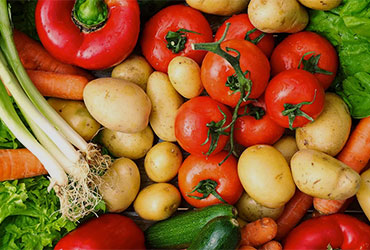
Vegetables play an important role in the human diet. They contain many vitamins and taste good. Since ancient times, people have grown vegetables to provide themselves with food, and use them in a large number of dishes as main ingredients. Vegetables are plants that you can eat. The term is most often applied to root vegetables, pumpkin and nightshade. Vegetables are an integral part of human nutrition. They contain vitamins, carbohydrates and other useful substances important for health. In summer, they form the basis of many diets, and in winter they strengthen the body and supply the elements necessary for normal functioning. Today there are about 200 vegetable crops. They are divided according to morphological and other characteristics, but for a person the most important thing is which parts of the plant can be eaten. Vegetables are one of the most valuable food products for humans. They are the main source of saturation of the body with carbohydrates, vitamins, phytoncides and other substances useful for health. Plant foods are foods with a high energy content. The fact is that during photosynthesis in vegetables, a number of chemical processes take place, due to which nutrients accumulate in their tissues. Once in the human esophagus, they begin to break down, which increases the overall tone of the body. In summer, vegetables should account for 30 - 40% of the daily diet, in winter - 50 - 60%. Starchy foods (pumpkin, carrots, potatoes, beets) are best combined with fats, and non-starchy foods (radishes, cucumbers, eggplants, tomatoes, cabbage) with meat dishes.
Green beans
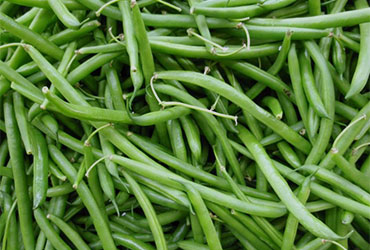
Green beans are considered a dietary food. It is often included in the diet of people who adhere to a healthy lifestyle, as well as closely monitor the calculation of daily calories consumed. The product has a low calorie content and, when consumed even in frozen form, will strengthen the immune system, as well as become a source of nutrients necessary for the normal functioning of internal organs. The calorie content of this product will surprise even experienced lovers of various diets. There is hardly 25 kcal for one hundred grams of the product. As a result, almost all those who are losing weight rely on it with a vengeance, noting that the taste characteristics are also at the level here. In addition to caring for the figure, you can "fill" the body with a number of useful elements, among which are presented in abundance: vitamins of group C, A, B, E, K; folic acid; carotenes. To obtain these elements, you just need to cook it correctly. Chefs warn that even freezing is not a problem for legumes. You just need to know how to freeze it for the winter without violating the technology of subsequent storage. An additional source of pride here is the abundance of fiber, carbohydrates and sugars. They work as a shield against the damaging effects of free radicals. It’s not for nothing that bean fans have their hair and skin shining with health. Nutritionists say that you should indulge yourself with such a useful product at least twice a week. This can be either a vegetable salad or a baked chicken side dish. For cooking, it is important to know exactly how much to cook the beans so that the nutritional properties are not lost. Enterprising housewives even learned how to preserve pods for the winter. Doctors note that this is a good option for supplying vitamins for the cold season, but we immediately make an amendment that with gentle heat treatment there are more vitamins left.
Black radish
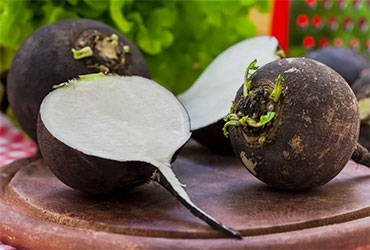
Black radish is considered especially popular. It is the most useful and controversial in terms of taste and aroma. The vegetable concentrates vegetable protein, carbohydrates, fructose, fat, vitamins and nutrients. Due to them, radish speeds up metabolic processes, strengthens the protective functions of the immune system, removes excess fluid from the body (additional prevention of urolithiasis). Agronomists call black radish a “local antibiotic”. The vegetable really affects most of the body’s systems and has a special medicinal and preventive effect. The unattractive appearance of the vegetable hides a real gastronomic discovery. In addition to its medicinal benefits, radish has many different flavors and uses. Cut out the core of the vegetable, wash it thoroughly and fill it with your favorite honey. Such a simple but insanely delicious dish will not only irritate your taste buds, but also protect against many diseases. The combination of sweet viscous honey with sour-bitter radish is simply impossible to describe in words, it is better to try it once. Moreover, honey infused with radish doubles its medicinal potential. The white crunchy pulp, which combines absolutely all possible tastes (from sour to sweet), is similar to a mixture of radish, horseradish, turnip and honey sweets. The aroma, taste, composition and shelf life of the radish depends on the correct marketable proximity. "Settle" black radish together in other vegetables that do not have a pronounced aroma. So we will protect the radish from foreign odors and will not violate the shelf life. The vegetable gets along best with carrots and seasonal potatoes. Store vegetables in a separate compartment or set aside the bottom shelf of the refrigerator for them.
Carrot
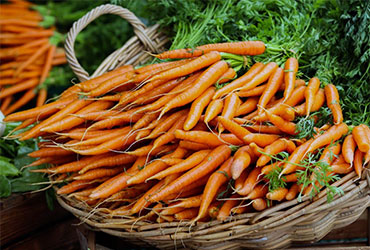
About 60 types of carrots are now known. Among themselves, they differ in the shape of the root (conical, spherical, oval, cylindrical, fusiform) and color (yellow, red, orange, white, purple). In terms of vitamin content, carrots surpass not only all vegetables, but also meat and dairy products. It contains many minerals: calcium, sodium, potassium, magnesium, phosphorus, iron, iodine and other essential minerals for humans. Carrots are a low-calorie product: 100 grams contains 35 kcal. A boiled root vegetable contains 7 to 10 fewer calories. Carrots can be eaten at any time of the year, as they are perfectly processed and preserved. It can be pickled, fermented, dried, frozen, salted. Not only root crops, but also young tops are edible in a vegetable. Carrots contain a lot of carotene - a substance that is converted into retinol (vitamin A) in the human body. So, 100 grams of raw carrots contains 9 mg of carotene (for reference: this is 8 times more than tomatoes). Retinol is extremely important for the proper physical and mental development of children, as well as contributes to skin elasticity and improved metabolism. With its deficiency, the skin becomes dry, abscesses may appear on them, and the nails become brittle. This is why retinol is known as a beauty vitamin. For better assimilation of carotene, carrots should be grated and seasoned with oil (vegetable, butter) or sour cream. Carrots can be used to make a wide variety of dishes. It goes well with almost any food: cereals, other vegetables, meat. It is a part of second courses, soups, salads, sweet products. It is eaten stewed, canned, boiled, raw and dried. Carrots have a sweetish taste, which depends on the variety (there are roots of varying degrees of sweetness). The peculiar aroma of the vegetable is determined by the essential oils that are present in its composition.
Patissons
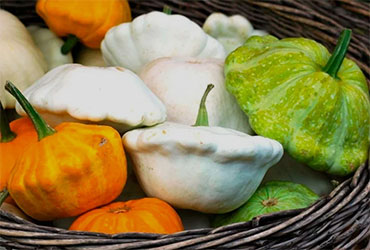
Patisson is one of the healthiest vegetables for the heart. Nature has combined in these fruits, it seems, all the useful substances that our cardiological system needs. Squash are vegetables from the pumpkin family, the closest relatives of which are cucumbers and melons. They are fast growing half shrubs. Grow best in well-drained sandy soils. At about 35-45 days of growth, bright yellow flowers appear on the bushes, from which cute slightly flattened disc-shaped fruits with wavy edges develop. In terms of chemical composition, they resemble zucchini and zucchini, but outwardly they are completely "knocked out" of the family. These small round fruits, resembling small saucers, first appeared somewhere in the area between Mexico and Guatemala. And today they delight people all over the world with their taste. In addition to the fact that the squash outwardly differ from their pumpkin "congeners", they also surprise with the original variety within the species: pale green, white, yellow - they are one of those vegetables that can please the eye with juicy summer colors. As already mentioned, squash is one of the most useful vegetables for the heart. They are virtually free of saturated fat, sodium, and completely cholesterol-free. But they are an excellent source of vitamins, minerals and fiber. 100 g of pulp of fresh squash contains no more than 20 kcal and more than 30 percent of the daily intake of vitamin C. "Hidden" in a vegetable and almost 8 percent of the recommended daily intake of folic acids, and besides, it is rich in vitamins A, B6, the most useful magnesium and potassium. These representatives of the pumpkin are rich in various micronutrients that are important for strengthening the body and increasing its ability to resist disease. Fruits with a golden yellow skin are slightly higher in antioxidant flavonoids such as carotenoids, lutein, and zeaxanthin. These beautiful vegetables are good for everyone. Blanched, boiled, frozen, steamed or grilled are great additions to a healthy diet. They are suitable for casseroles, stews and even baked goods. But for food it is better to choose young squash (5-7 cm in diameter) - at this stage of ripening, they are sweeter, softer and more appetizing. If the crop is not harvested on time, the squash will continue to grow, their skin will become tough, the pulp is firm and less juicy, and the seeds are inedible. Choosing squash, you should also avoid fruits with damaged skin, with "bruises" and dark spots - such vegetables are not suitable for storage and quickly rot. Squash is stored, like other types of zucchini, in the cold, wrapped in cling film, to prevent moisture loss. Squash gets into dishes in different forms: chopped or whole (as a basis for minced meat or a portioned "plate"). By the way, besides fruits, squash flowers are also used for food. They are fried in batter, added to baked goods, served as a side dish.
Greenery
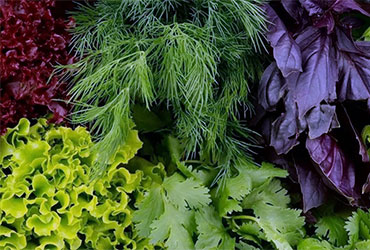
Greens - fresh young shoots of plants growing in cultivated or free form, used both as an independent dish and as a seasoning for various dishes. Greens are put in salads, added to soups, used as a seasoning when stewing meat, sauces are prepared with them, mashed potatoes, eaten raw. Greenery is rich in biologically active substances, and is also filled with essential vitamins, primarily ascorbic acid, carotene, B vitamins. Plants contain pyridoxine, folic and pantothenic acids, inositol, choline; there is a significant amount of tocopherols (Vitamin E). Onions and garlic, dill and parsley, horseradish and rhubarb, as well as many other green herbs, should be present in the diet as an essential part of most dishes that are used in everyday life. The biological activity of plants containing vitamin C, vitamin B6, carotene, folacin is the complex of vitamins that are necessary for normal human life, it manifests itself and reveals its beneficial properties even with a relatively small amount of herbs in the diet.
Grocery
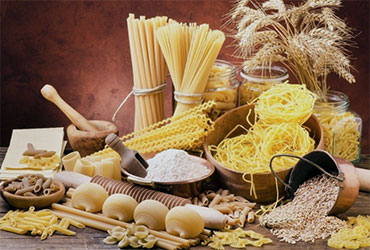
Grocery - dry basic food products, semi-finished products and canned food, as well as some basic household goods (soap, washing powder, matches). From the point of view of the organization of food retail trade, groceries, characterized by long shelf life and unpretentious storage, are contrasted with gastronomic, usually ready-to-eat, more expensive and requiring special storage conditions. According to the modern trade classification, food groceries include: cereals, flour, pasta, sugar, starch, food concentrates, yeast, tea and tea drinks, coffee and coffee drinks, vegetable oils, salt, vinegar, spices. Due to the availability of refrigeration equipment, modern convenience stores typically sell both grocery and deli items, including meat and dairy products, as well as fresh vegetables and fruits.
Tea and tea drinks
Leaves of young shoots of the tea tree are used to make tea. Tea contains caffeine (2.0-3.5%), tannins (15.9-19%), essential oils (0.06-0.20%), carbohydrates, enzymes, vitamins, and minerals. Especially valuable in tea is the content of vitamins P and C; vitamin P increases strength and reduces the permeability of capillary blood vessels. Vitamin C increases the body’s resistance to infectious diseases. Types of tea are varied in technology of preparation. They are subdivided into: long tea (black, green, yellow, red); pressed; extracted (instant); granulated, bagged (tea packed in bags for one-time brewing); flavored, tiled (pressed). Tea drinks are made from dried leaves of blueberries, lingonberries, strawberries, willow tea, and other plants. Tea drinks do not contain caffeine. They are released in the form of mixtures of berry fruits (peeled, fried, crushed), add fruit essence, molasses.
Coffee and coffee drinks

Many of us cannot imagine life without coffee. Without its awakening aroma in the morning, without its bitter, but such a pleasant taste, invigorating and tonic. Our love for this drink, as a rule, is limited to two or three of the most common recipes for its preparation - those that are more often offered in cafes, or you know how to cook it yourself. However, the variety of coffee drinks is endless and making them is not that difficult, even at home. Not all people can drink real coffee, due to the fact that it increases blood pressure. Therefore, a coffee drink based on barley or chicory is an excellent alternative in this case. In addition, there are these delicacies based on ready-made coffee, to which various additives are used that set off the taste. Coffee is the most common type of beverage to start the day for many people. Due to this, the human body is filled with energy and vigor. In this regard, gourmets prepare various types of delicacies on the basis of coffee. There are also other coffee drinks that contain a variety of additives. One of these types is a coffee drink made from barley. Barley is often added to coffee beans, and can also exist as an independent component. The next type is the Chicory coffee drink. There are 2 types: chicory, as a complete component of the drink, and also as an additive to coffee beans. Chicory has a sweet taste, which allows it to be consumed cooked without added sugar, which means it can be used by diabetics and people who are obese. Another type is a coffee drink made from barley and rye. It is as healthy as the previous two types of coffee treats.
Vegetable oil
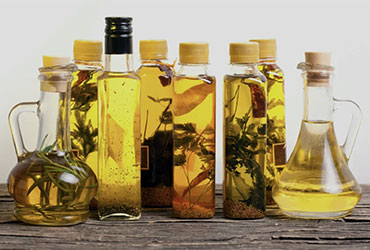
Vegetable oil - fat extracted from vegetable raw materials. At room temperature it retains the smell, taste of fruits and seeds from which the product is extracted.
Table vegetable oils include: corn, soybean, linseed, sunflower, olive, peanut, nut, mustard, sesame.
Product types by raw material processing method:
- first spin;
- extracted;
- hydrated;
- refined and deodorized.
The greatest value for the human body is provided by virgin oil. It retains the maximum amount of nutrients. In addition, no chemical components are used in the cleaning process.
Groats
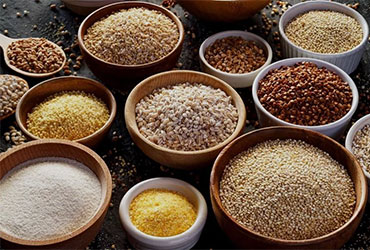
Cereals are crushed or whole grains of various crops, mainly cereals, which are a valuable source of energy and useful vitamins, macro- and microelements. Soups and cereals are made from them. The beneficial properties of cereals depend on the type of culture.
Classification:
- bread (sorghum, rye, corn, barley, wheat, rice, millet, chumiza);
- legumes (lentils, beans, beans, peas, soybeans, chickpeas);
- buckwheat (buckwheat);
- amaranth.
The influence of some cereals on the human body:
- buckwheat, supports the health of the organs of vision, improves metabolism, removes toxins;
- millet, strengthens the walls of blood vessels;
- corn, regulates cholesterol;
- barley, supplies the body with protein-containing gluten, activates collagen production, fights allergic reactions;
- oatmeal, normalizes the liver, digestive organs;
- rice, lowers blood pressure.
In order for the body to "remove" useful substances from the porridge to the maximum, choose the cereal carefully. Pay attention to the shape, color of the beans and the shelf life of the product. It should not contain foreign impurities, stuck together lumps.
To be healthy and strong, eat cereals with fruits, vegetables, herbs every day.
Spices
Spices are one-component substances that enrich food, enhance flavor and increase digestibility. Like any dietary supplement, they can be beneficial if used wisely in small amounts. Spices stimulate appetite, normalize metabolism, improve digestion, exhibit bactericidal properties. Unlike seasonings, they do not have a pronounced aroma, however, the taste and texture of the dishes change dramatically.
Common spices:
- sugar;
- salt;
- yeast;
- soda;
- vinegar;
- mustard;
- starch;
- gelling agents (gelatin, agar-agar);
- food acids;
- baking powder.
Flowers
Our company offers a diverse range of flowers on favorable terms for cooperation with flower shop owners, florists and those who are ready to join the business. We will help you by providing a huge range of flower products in small and large wholesale. We deliver goods from Holland, Ecuador, Kenya, Israel, Ecuador and other countries. Our range includes fresh cut flowers and indoor plants. Our work is based on the principles of respect for customers and continuous development. We offer flowers of the highest quality! Direct deliveries from manufacturers from all over the world. Fast execution of the order, because flowers love freshness. Own logistics system allows you to deliver the order as quickly as possible.
Carnations
Carnation - beautiful, marshmallow, delicate. She has an amazing texture, and she looks great in prefabricated author’s bouquets. At the same time, it can play an excellent solo in a vase. The many colors of carnations are the envy of peonies and roses combined. Her colors are unique and modern. It is fragrant - yes, yes, the clove smells of freshness and greenery. She is super resistant, which, in general, is not a secret. And it will delight you much longer than the same roses. Carnation is one of the most successful options in terms of durability-effectiveness-cost ratio, we always recommend bouquets of carnations. Carnation is a beautiful perennial flowering plant. The single-headed carnation is familiar to many. A strong marshmallow bud, a huge variety of shades, high durability - it’s all about her.
Carnation care is not difficult and straightforward. Below are a few nuances that will help prolong the life of the flower: at the time of purchase, the base of the bud should be quite dense, and there should be no rot or stains in the carnation petals themselves; the buds should not be crowded, otherwise they will quickly rot due to the lack of air circulation; cloves are extremely sensitive to ethylene, so don’t place the vase next to fruit. Lifespan in water is 14 to 21 days.
Dahlias
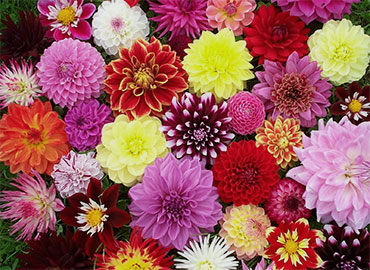
Dahlias have reached a new level of popularity. Like the fashion industry, floristry does not stand still, and the attitude towards dahlias is changing in the same way as the attitude towards, for example, square-toed shoes. Yes, not everyone loves them out of individual preference - just like not everyone loves roses or peonies - but in general, no one perceives a bouquet with dahlias as bad manners. And no one even dares to call them boring - just look at what luxurious varieties of dahlias are and how they look in bouquets!
Dahlias are a powerful and lush plant with unpaired pinnate leaves and dense flower baskets of various colors. It is impossible to describe a dahlia flower in one line, because no ornamental plant has such a diverse form of inflorescences and their colors. Numerous varieties of dahlias differ in the growth of the bush and the shape of the inflorescences. Tall dahlias reach 2 m in height, medium-sized - 1.5 m and dwarf - 0.7 m. According to the nature of the inflorescences, groups of dahlias are distinguished: simple, non-double, collared - the flower disk is surrounded by a double row of petals of different colors, cacti - terry inflorescences with folded in a narrow tube with petals, decorative - terry with wide petals, spherical and pompom - with terry dense round inflorescences.
Gypsophila
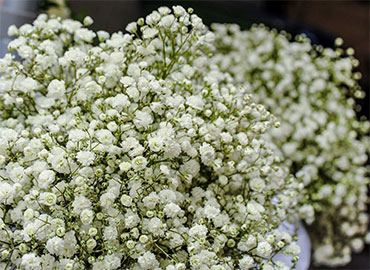
Remember how widespread gypsophila bouquets were? Then it was just a modest flower-addition to the main components of the composition. Often gypsophila was combined with red roses, which is why many do not like it so much. It would never have occurred to anyone to collect it in a mono-bouquet, except for the sake of a joke. And even more so - arrange a wedding with gypsophila decoration! Now you can easily see clouds of white, colored and iridescent gypsophila in the composition of wedding bouquets and wreaths, as well as in the design of events. Large armfuls of gypsophila look especially impressive, while they come out more budget-friendly than bouquets of the same volume from other flowers. Gypsophila retains freshness from 7 to 20 days, but it needs to be looked after: the water in a vase with gypsophila becomes cloudy, and it needs to be changed every other day.
The genus includes more than 100 species distributed in Eurasia, northeast Africa, Australia and New Zealand. Judging by the description of gypsophila, these are annual and perennial herbaceous plants, some species are semi-shrubs with a branched, bare erect or prostrate stem 20–50 cm tall. Leaves entire, lanceolate, small. Inflorescences loose, paniculate, consisting of small flowers. Gypsophila is often used to decorate bouquets, but plants of this rather extensive genus are grown both on alpine hills and in gardens. Gypsophila can also be cultivated as a potted plant. Gypsophila paniculata or creeping are usually grown in pots.
Gerberas
The bright daisy-like flowers were very popular. You have seen them in the windows of flower tents, and often in the most poisonous shades. Probably, it was from then on that gerberas began to be perceived as something vulgar, without even understanding that not all of its varieties look like this. There are many beautiful lace varieties, with small petals that can diversify the flower arrangement. By the way, if you pay attention to the meaning of flowers, gerbera means a wish for happiness. And it is also distinguished by its durability: it remains fresh for about 10 to 20 days.
The gerbera plant is a favorite flower for making bouquets. But if you want to have such a mini-bouquet at home all year round, you can grow this culture in a pot. Large flowers, similar to terry daisies and growing one at a time on a thick peduncle, will decorate any interior and fit into floral arrangements with a variety of plants.
Potted plants
Potted plants have an advantage over bouquets - they will please the owner longer.
Indoor flowers, according to those who are fond of them, are not only an interior decoration, but also a “pet” and an “antidepressant” in one bottle. Potted plants are pleasing to the eye, decorate interior design and purify indoor air.
Wine
We offer a wide range of wines that will satisfy the tastes of the most discerning connoisseurs. It features wines from various regions of the world such as France, Italy, Spain, Argentina, Chile, Australia and New Zealand. The company’s assortment includes both young wines and wines aged for many years.
The company offers wines from different grape varieties, such as Cabernet Sauvignon, Merlot, Chardonnay, Pinot Noir, Sauvignon Blanc, Riesling and others. The company’s assortment also includes wines made from blends of different grape varieties.
For lovers of sweet and dessert wines, the company offers a wide selection of wines from regions such as Tuscany, Piedmont, Burgundy, Moselle and Rheingau.
In addition, the company offers wines produced using traditional methods, such as natural wine, biodynamic wine and wine from grapes grown in ecologically clean areas.
The range of wines can be very diverse. Wines can be classified according to many parameters, such as region of production, grape variety, age of wine, sugar content and alcohol level. Some of the most common types of wines include white wines, red wines, rose wines, sparkling wines and fortified wines. Additionally, wines can be categorized based on their quality and price.